
Is it possible to become a nurse later in life? Absolutely. Accelerated programs make becoming a nurse at 40 or later possible by leveraging your previous degree. Nursing offers many benefits, such as high salaries and career advancement, which is why many have decided that nursing is right for them.

Becoming a Nurse at 40: A Fulfilling Career Change
Is becoming a nurse at 40 possible? Of course it is. Whether you have spent years away from the workforce or are looking for a career change, nursing is a field that anyone can enter, provided they receive the necessary training. Becoming a nurse later in life is possible, and as you take the steps toward the career change, you’ll find that you’re not alone.
Many people make this career change later in life. At the University of Mount Saint Vincent, the Accelerated Bachelor of Science in Nursing (ABSN) program is designed for non-traditional students. The program allows individuals with a non-nursing bachelor’s degree to earn a Bachelor of Science (BS) in nursing in as few as 16 months, fast-tracking their education so they can become licensed and start working as a nurse quickly.
Learn why you should consider a career change to nursing, how you can make it happen fast, and what career opportunities are waiting for you once you’re licensed.
Common Motivations for Becoming a Nurse Later in Life
A career transition is a big change, regardless of age. If you are thinking of becoming a nurse at 40 or beyond, you are not alone. Many others have decided to make the change before you because they wanted to:
- Answer a calling to nursing that they were unable to pursue earlier in life
- Help others and make a meaningful impact
- Act on feelings of burnout from their current career
- Follow in the footsteps of healthcare professionals who’ve helped them in the past
Nursing is a highly rewarding career. While it will require you to return to school to earn a nursing degree, the career benefits are worth it.
Why Consider Becoming a Nurse Later in Life?
Making the career change to nursing has many benefits. It’s a chance to pursue a more meaningful line of work, where you can make an impact on people’s lives. In Gallup’s 2025 Most Honest & Ethical Professions poll, nurses ranked number one for the 23rd consecutive year. Becoming a nurse means you will join a highly respected profession.
Nursing also offers competitive earning potential and stability. According to the U.S. Bureau of Labor Statistics’ most recent data, nurses earned a median salary of $93,600, and the profession is projected to grow by 5% over the next decade.
Is It Too Late to Become a Nurse?
Is becoming a nurse after 40 too late? No, it’s never too late to become a nurse. You will be working alongside nurses of all ages. If you meet the requirements for an accelerated BS in nursing program, your cohort will comprise students of all ages.
While becoming a nurse later in life might feel intimidating, know that your experience will give you an advantage in nursing school and your future career. You have likely already honed communication, time management, and organizational skills in your previous work; these skills are critical to a nurse’s success in healthcare. Your life experience will also help you relate to and connect with patients.
Steps to Start Your Career Change to Nursing
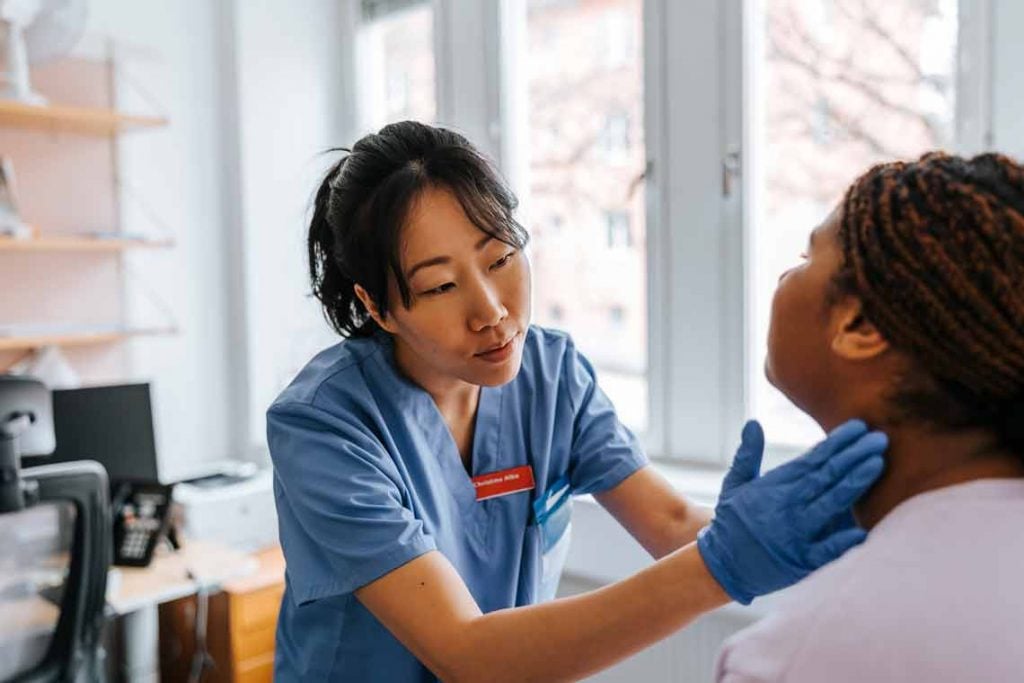
To make the career change to nursing, you must first earn a nursing degree. There are several pathways to consider, so you will need to determine the type of degree you want to earn and select the program that is right for you.
You can earn either an associate degree in nursing (ADN) or a BS in nursing. While both degrees qualify you to take the NCLEX-RN, the nationally recognized nurse licensure exam, there are many added benefits to earning a BS in nursing over an ADN.
Baccalaureate-educated nurses are in high demand for their critical thinking, case management, and leadership capabilities. Studies have also shown that higher percentages of RNs with a BS in nursing in hospitals lead to increased positive patient outcome rates.
Find the Right Nursing Program for You
After deciding which degree is right for you, consider your program options and the time it takes to complete. When becoming a nurse at 40, the fastest track to graduation is ideal. Options include:
- ADN programs: An associate degree program is good for students without college experience who want to earn a degree quickly. It typically takes two years to complete.
- Traditional BS in nursing programs: A traditional bachelor’s degree program is best suited for students without college experience and takes four years to complete.
- Accelerated BS in nursing programs: An accelerated program typically takes less than two years to complete and is best for students with a non-nursing bachelor’s degree. At Mount Saint Vincent, the ABSN program can be completed in as few as 16 months.
Apply to Nursing School
The next step is to start the admission process. While specifics vary across nursing programs, you can expect to submit official transcripts, a personal statement, and letters of recommendation. If applying to an accelerated program, you will also need to complete prerequisite courses.
At Mount Saint Vincent, the admission process involves:
- Reaching out to an admission counselor to discuss eligibility requirements
- Creating an academic plan with the help of your admission counselor to meet prerequisite requirements in time for your target start date
- Completing prerequisite courses so you enter the program with a foundation in math, science, and general education
- Submitting your accelerated nursing school application, which should include:
- Official transcripts
- One letter of recommendation
- An essay on why you want to become a nurse

Prepare Financial Aid
Nursing school is an investment and, for many students, only possible through careful financial planning. Many financial aid options, such as scholarships and grants, federal and private loans, and work-study programs, help make nursing school possible.
Additionally, the Yellow Ribbon Program, in which the University of Mount Saint Vincent is a participant, has made nursing school and higher education possible for many military service members and veterans.
Your admission counselor can help you review your financial aid options and connect you with the financial aid office for more assistance.
Earn a Nursing Degree
While specifics vary, an accredited nursing school curriculum will prepare you with the knowledge and skills needed to embark on a nursing career. At Mount Saint Vincent, the ABSN program includes:
- Nursing Coursework: The onsite-based coursework covers topics such as pathophysiology, health promotion, nursing research, and evidence-based practice.
- Hands-On Nursing Labs: These in-person labs include two types: skills and simulation. Skills labs allow you to practice core skills on medical manikins. Simulation labs require you to work as a team with other students to treat medical manikins in realistic mock clinical scenarios.
- Clinical Rotations: Mount Saint Vincent’s clinical partners include Memorial Sloan Kettering, Mount Sinai Hospital, and other respected facilities throughout New York City, offering students real-life, hands-on clinical experiences across various nursing specialties, such as adult health, obstetrics, and intensive care.
Pass the NCLEX-RN
Once you earn a nursing degree, you can register to take the NCLEX. The exam is rigorous and designed to assess prospective nurses’ understanding and application of core nursing principles. To prepare, you must do more than memorize facts. You must synthesize and apply what you have learned in nursing school.
Your program will help prepare you for the exam; however, it is also recommended that you study independently and in study groups. It’s best practice to start studying, reviewing practice questions, and taking practice exams while you are still in nursing school. Once you graduate, you can dedicate the weeks leading up to the exam to studying.
Learn how you can prepare for the exam with these NCLEX study tips.
Obtain a Nursing License
After passing the NCLEX, you can register with your state board of nursing to obtain a nursing license. As a newly licensed registered nurse, you are ready to start your career. There are numerous entry-level positions available across various specialties and healthcare environments, allowing you to find the right fit for your interests and strengths.
Challenges You Might Face and How to Overcome Them
Nursing school is challenging. You will need to juggle coursework with labs and clinicals, participate in advanced science and nursing courses, and balance school with other responsibilities. Despite these challenges, however, it’s not impossible. Through hard work and a support system, you can rise to meet these challenges and earn a nursing degree.
Becoming a nurse later in life also presents unique challenges. As you start this new endeavor, know that you are not alone. Members of your cohort will have similar experiences, and the connections you make can help support you. Potential challenges include:
- Balancing school, work, and family: By building time management and organizational skills and leaning on a support network, you can strike a balance between all responsibilities.
- Meeting the physical demands of nursing: Nursing is a physically demanding job where you’ll spend your shifts on your feet. Wearing comfortable shoes for your shift and engaging in regular exercise, even for just 20 minutes, can help you meet the physical demands of the job.
- Navigating technology and academic environments: As a nursing student, you will be supported by dedicated faculty and Academic Success Coaches to help you adapt back to an academic environment and learn to use modern tech in a healthcare environment.
- Avoiding burnout: Practicing self-care is key to preventing burnout. Scheduling time for hobbies, family, friends, or any activity that relaxes you is essential for preventing burnout and continuing to excel in nursing school.
Career Opportunities for Nurses Who Start Later in Life
When you make the career change to nursing, you can choose from entry-level positions in many diverse areas of nursing. After gaining clinical hours in your field, you can pursue optional certifications in your specialty to help improve your credentials and pave the way for more advanced positions.
You can specialize in patient populations, such as:
- Adult-gerontology
- Obstetrics
- Pediatrics
You can also choose from specialties based on condition, such as:
- Labor and Delivery
- Mental and Behavioral Health
- Oncology
You can work in a variety of environments, including:
- Clinics
- Hospitals
- Long-term care facilities
- Patient’s homes as a home health nurse
You will also have many career advancement opportunities. You could pursue leadership positions, such as becoming a nurse manager, or return to school to earn a graduate degree and become an advanced practice registered nurse (APRN), which grants you more practice authority. Types of APRNs include:
- Nurse Practitioner
- Certified Nurse Midwife
- Certified Registered Nurse Anesthetist
- Clinical Nurse Specialist

Read more to learn what it’s like to be a Certified Registered Nurse Anesthetist and how you can become one.
Take the First Step with Mount Saint Vincent
If you are considering a nursing career, now is the time to take the first step. The University of Mount Saint Vincent’s ABSN program allows students to leverage their bachelor’s degrees to earn a BS in nursing faster than in traditional programs.
Through comprehensive coursework, hands-on labs, and diverse, real-world clinical experiences, students are prepared with the knowledge and skills needed to thrive in today’s healthcare environment. Contact an admission counselor today to learn if the ABSN program is right for you.