
To prepare students to become competent nurses, you can expect nursing school to be challenging. Earning your nursing degree requires adapting to academic rigor and practicing good time management, but knowing and expecting these challenges will help you prepare for success.

While every student’s nursing school experience is unique, nursing school is generally considered challenging. Depending on the specialty you choose, nursing can be a fast-paced, high-stakes career, which is why nursing students need a strong educational foundation that prepares them for the challenges of the field. Is nursing school hard? Yes, but not impossible, and the difficulties you face in nursing school will help you become a better nurse and excel in your career.
You will face challenges in your journey to becoming a nurse, but in the University of Mount Saint Vincent’s Accelerated Bachelor of Science in Nursing (ABSN) program, you’re not alone. You will be supported every step of the way by dedicated faculty and your nursing cohort while earning a Bachelor of Science (BS) in nursing in as few as 16 months.
Is it hard to become a nurse? While there may be challenges, knowing what to expect in advance can help you prepare to succeed. Examine the factors that make nursing school difficult and learn some tips to help you excel.
How Hard Is Nursing School?
The coursework in nursing school can be challenging, as you’ll need to learn complex information. In nursing labs and during clinical rotations, you’ll need to apply critical thinking and analytical reasoning skills and learn to handle a wide range of clinical situations. You’ll also need to develop a good bedside manner.
For all these reasons, nursing school can be difficult. It’s helpful to develop a good rapport with instructors and with other members of your nursing cohort, as nursing students often lean on each other for emotional support and group study sessions. A strong support network can help you navigate nursing school.
Learn more about ABSN prerequisite requirements.

What to Expect as a Nursing Student
How hard is it to become a nurse? Although it may not be easy, knowing what to expect can help ease the transition.
1. The Academic Rigor of Nursing School
How hard is it to get a nursing degree? The coursework can be challenging, which is to be expected considering that nurses must handle life-or-death situations. In addition to prerequisite courses, such as Chemistry, Microbiology, and Anatomy and Physiology, you must complete nursing core classes in areas like pharmacology and pathophysiology.
Be mentally prepared before beginning classes. Speak with other nursing students to better understand their workload, study schedule, and what it is like to attend classes. Brush up on your study habits and strategies and consider supplementing coursework with nursing tutorials and podcasts to enhance understanding.
2. Time Management Challenges
Time management is essential. In school, you’ll juggle coursework, labs, clinical rotations, studying, and personal commitments. You’ll need to prioritize tasks and optimize your time, such as by avoiding procrastination.
Many nursing students create detailed schedules that include daily activities such as eating, exercising, and studying. You should also note weekly and other recurring activities, such as labs, clinicals, study groups, and in-person exams.

3. Hands-on Learning Requirements
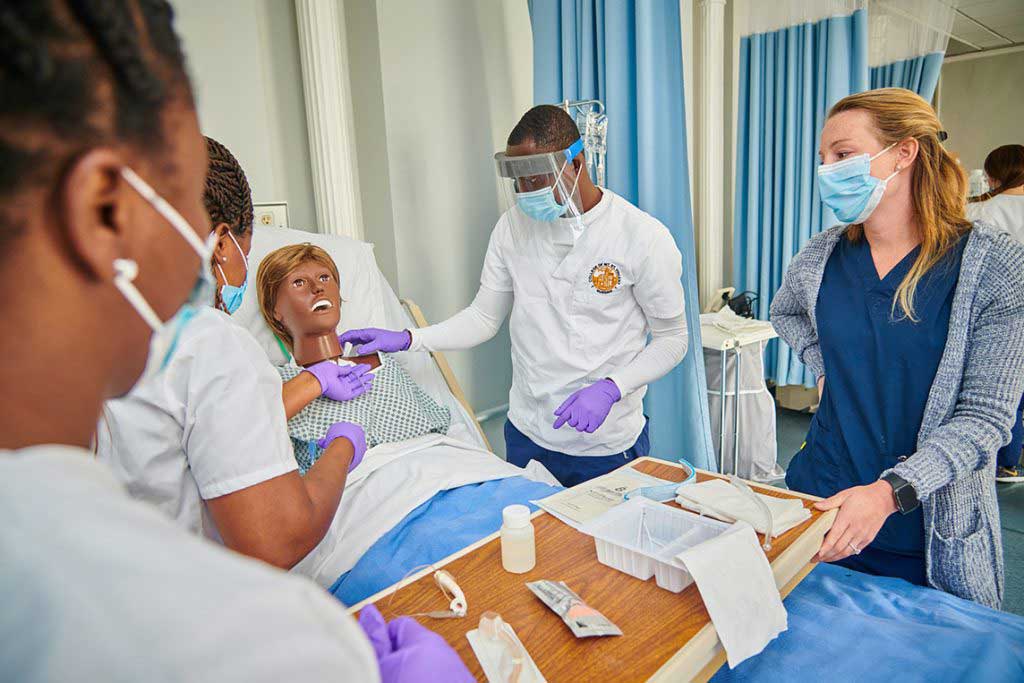
Nursing is a hands-on profession. You’ll complete hands-on skills labs, simulation labs, and clinical rotations.
Nursing labs help students develop basic nursing skills and practice what they learn in their coursework in low-risk, realistic scenarios. During clinical rotations, students work in an actual healthcare setting, providing direct patient care.
Ask your instructors and preceptor questions whenever needed. Offer to jump in and help. Be an advocate for your learning in any way possible. This will help you become a better nurse and feel more confident.
4. Planning Ahead
It’s essential to plan your daily, weekly, and monthly schedule; however, don’t neglect planning ahead for the NCLEX-RN exam as well. Start studying as early as your first semester and take multiple practice exams.
You can also start planning before enrollment. Discuss the admission timeline with your admission counselor and create a plan to fulfill the prerequisites. If anything happens to delay your progress toward enrollment, notify your counselor right away and adjust your admission plan.
5. Commitment to Understanding Nursing Practice
Success in a nursing program requires much more than completing coursework. You must also develop your decision-making, critical thinking, and patient interaction skills.
You can expect nursing school to reflect this holistic approach. Go the extra mile when studying, such as by moving beyond rote memorization. Try to relate nursing concepts to patient case studies to enrich the learning process.
Explore essential tips so you can prepare for nursing school.

6. Hard Work and Dedication
You will need a strong work ethic and a commitment to your goals to finish nursing school. As challenging as nursing school might be, it is also gratifying as you apply yourself and invest in a fruitful future as a nurse.
Structure your life to anticipate this level of hard work. Treat nursing school like a full-time job. Reach out to your support system and surround yourself with people who will remind you of your “why” when things get tough. This encouragement will help you push through the challenges.
7. Prioritizing Self-Care
Self-care is crucial to your success as a nursing student. In fact, self-care is an element of the American Nurses Association’s Code of Ethics. Prioritizing self-care during nursing school can help you successfully navigate school without suffering burnout.
Make sure your self-care activities are on your schedule right from the start. This will help create a structure around which other calendar items will fit. Make time to take care of your body and emotions, whether by buying healthy groceries instead of eating out or reading a book instead of scrolling on social media. Treat yourself with the same care you would a patient.
Nursing School May Be Hard, But It’s Worth It
For students with prior non-nursing college experience, a four-year degree may not seem worth the challenges. With The Mount’s ABSN program, however, you can complete your nursing degree in as few as 16 months. Is nursing school hard? Yes, but with the help of the ABSN program, you can fast-track your path to nursing and re-enter the workforce faster.
Start Your Journey in Nursing at The Mount
Mount Saint Vincent offers exceptional student support so you can overcome challenges and thrive at nursing school. Our five ABSN learning sites throughout New York City feature small class sizes, with a 13:1 student-to-faculty ratio. You can also work one-on-one with an Academic Success Counselor, who can help you acquire smart study habits and develop solutions to any challenges you may experience. At Mount Saint Vincent, we focus on the development of the whole student.
Request more information from an admission counselor at the Mount today to get started. You’ll work one-on-one with your dedicated counselor throughout the admission process.