
Telehealth nursing is the practice of delivering care remotely using telecommunications equipment. Telehealth nurses assess patients, deliver remote care, and provide patient education. To become a telehealth nurse, you’ll need a nursing degree, license, clinical experience at the bedside, and optional nursing certifications.
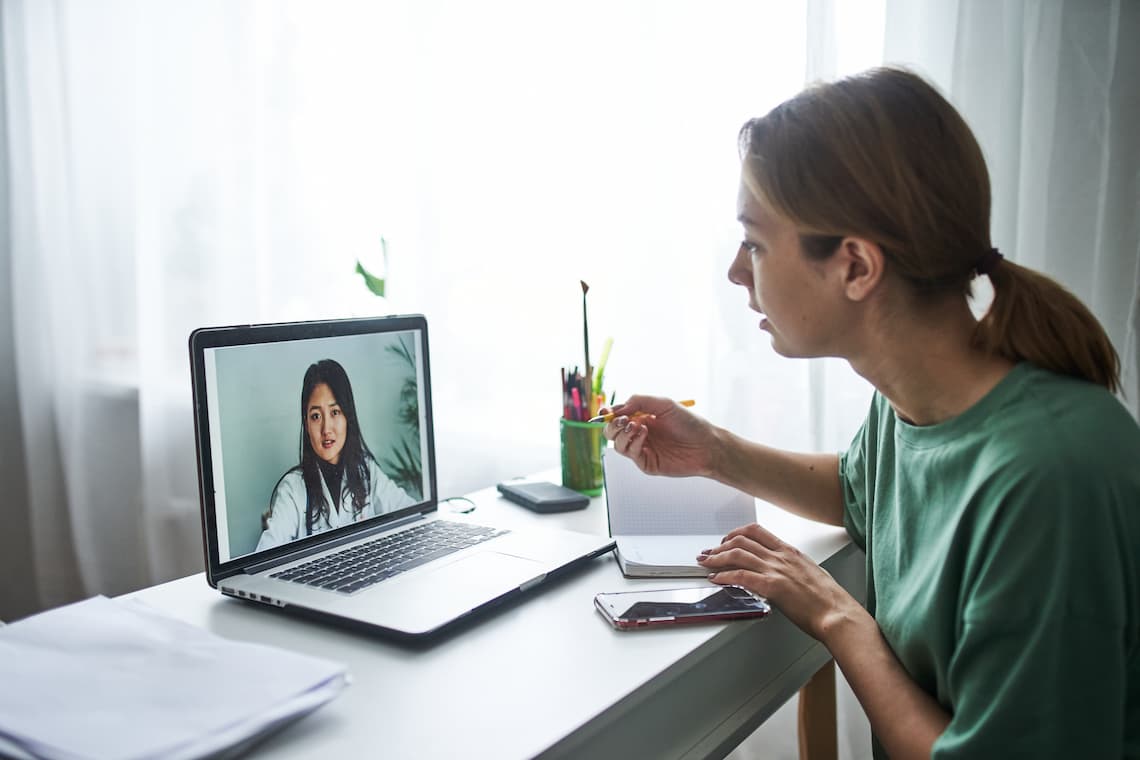
To start a career in telehealth nursing, you’ll need a nursing degree, a registered nurse (RN) license, and clinical experience at the bedside. You’ll also need relevant skills in digital technology and strong competencies in protecting sensitive health information. Professional certifications, while not mandatory, may also help advance your career.
If you’re interested in switching careers to nursing, you can leverage your prior non-nursing education to get started soon. The University of Mount Saint Vincent’s Accelerated Bachelor of Science in Nursing (ABSN) program enables individuals with a completed non-nursing degree to earn a Bachelor of Science (BS) in nursing in as few as 16 months after completing prerequisite courses.
What is telehealth nursing, and is it the right choice for you? Before diving into career planning, take some time to learn about the growing telehealth trend, what telehealth nurses do, and which skills and qualifications you’ll need to get started.
What Is Telehealth Nursing and Why Is It Growing?
Telehealth nursing delivers healthcare via telecommunications technology. Remotely, a registered nurse can assess a patient’s symptoms, determine the severity of their condition, and recommend an appropriate treatment. They will also advise patients to schedule an in-person appointment or seek immediate medical care when necessary.
Why is telehealth a growing trend? Telehealth is a growing subfield for the following reasons:
- Accessibility: Telehealth appointments can expand access to care, particularly for patients living in remote areas with few healthcare facilities nearby.
- Convenience: Many patients and providers find telehealth nursing to be a more convenient care delivery model than in-person appointments. It reduces the need for commuting and limits disruptions to one’s schedule.
- Cost-efficiency: Healthcare costs are a concern for patients, health organizations, policymakers, and other stakeholders. Telehealth helps keep costs down. Providers benefit from reduced office space, and patients save on travel expenses, child care, and lost wages from taking time off from work.
- Safety: Remote nursing can promote better safety for patients and nurses. Since it limits in-person contact, telehealth nursing reduces the spread of pathogens.

Explore transitioning to nursing as a second career.
What Telehealth Nurses Do in Their Daily Roles
Working within their nursing specialty, telehealth nurses may perform a variety of tasks on a day-to-day basis, including:
- Assessment and triage
- Care coordination and case management
- Documentation
- Patient education
- Remote monitoring and interpretation
Remote healthcare delivery can be used in many ways, including the following:
- A high-risk patient with a suspected respiratory infection could be prescribed appropriate medications remotely rather than going into a hospital and exposing others.
- A nurse can provide step-by-step instructions on post-surgical wound care while observing the patient correctly perform the task.
- A patient may take a digital picture of a skin rash and transmit it to a nurse for remote assessment.
Remote healthcare technologies also allow nurses to monitor patients’ health from anywhere. Remote monitoring technologies include devices worn by patients, such as blood glucose monitors. A nurse can tell whether a patient with diabetes has missed blood glucose checks or has a risky blood glucose level, allowing the nurse to contact the patient and provide guidance.
Skills and Qualifications Needed for a Telehealth Nursing Career
What is telehealth nursing’s most important qualification? An aspiring telehealth RN must have the following:
- A nursing degree
- A nursing license
- Clinical experience at the bedside
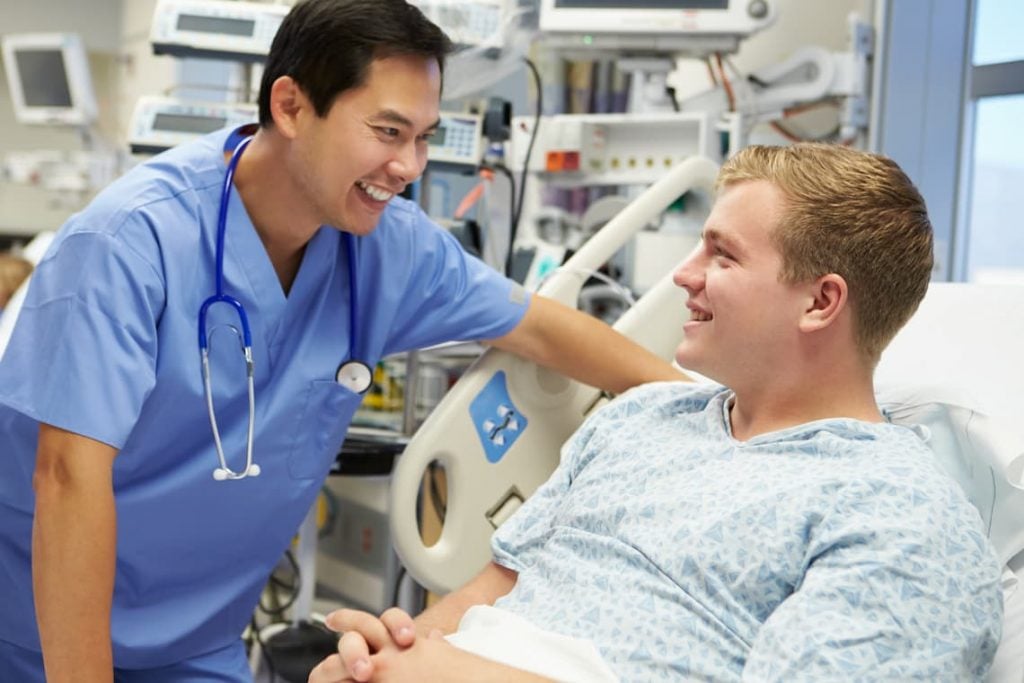
Although it’s considered optional, some telehealth nurses also obtain professional certifications relevant to their nursing specialty.
To excel in telehealth, nurses must be skilled in:
- Clinical judgment
- Crisis management
- Data privacy and security
- Digital proficiency
- Documentation
- Patient assessment
- Patient education
- Proficiency with remote health monitoring devices
- Technical troubleshooting skills
Other skills not specific to a telehealth nursing career, but are necessary for nurses, include:
- Problem-solving skills
- Adaptability
- Attention to detail
- Communication skills
- Critical thinking
- Cultural competence
- Organization
Where Telehealth Nurses Work: Career Opportunities Available
Telehealth nurses can work in a variety of settings, including fully remote from home offices, and can be employed by hospitals, health systems, or independent medical practices. Regardless of where they work, they must ensure the privacy and security of their office and equipment.
They must also adhere to HIPAA regulations that mandate the secure and private protection of patient information by using HIPAA-compliant telecommunications equipment and digital meeting platforms.
Other telehealth nurses travel to an office space to meet with patients digitally. They might work within hospital units, insurance companies, specialty clinics, specialized call centers, or health-related hotlines, such as poison control centers and crisis hotlines.
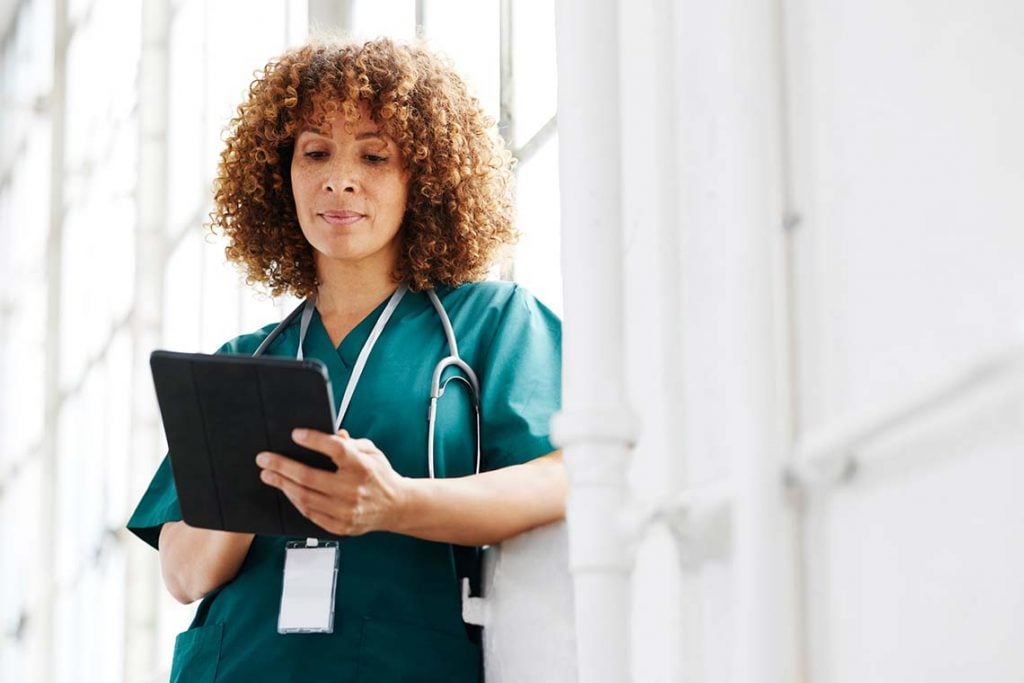
In addition to telehealth nursing, there are many other healthcare career options. Explore alternative nursing careers away from the bedside.
Steps You Can Take to Begin a Career in Telehealth Nursing
If you’re passionate about helping patients access the care they need, no matter where they are, it may be time to consider how to become a telehealth nurse. It all starts with earning your nursing degree at the Mount.
Earn a Nursing Degree
All nurses must earn a nursing degree to be eligible for the licensure exam. If you hold a non-nursing bachelor’s degree, you may qualify for the ABSN program at Mount Saint Vincent with five locations throughout New York City. This accelerated pathway to a second nursing degree doesn’t require prior healthcare experience or education. Our ABSN program has three start dates per year, and students can graduate in as few as 16 months.
It all starts with onsite coursework, which offers in-person access to instructors and support from fellow nursing students. In nursing skills labs, you’ll develop core skills, such as wound care. While in nursing simulation labs, you’ll respond to mock patient case scenarios with high-tech medical manikins that simulate patient responses. You’ll also be placed in clinical rotations at hospitals in the New York City area, where you’ll work with healthcare professionals and deliver direct patient care under the supervision of your preceptor.
Obtain Licensure
After earning a BS in nursing, the next step toward becoming a telehealth nurse is passing the NCLEX-RN and obtaining state licensure. The NCLEX-RN is a rigorous exam that evaluates your knowledge of nursing concepts and your ability to assess patients and form appropriate clinical decisions. Once you pass the exam, you can apply for state licensure.
Gain Clinical Experience
After obtaining your nursing license, your next step is to apply for an in-person nursing job. Even if you’re certain you’d like to pursue a telehealth nursing position, you must first gain at least a few years of bedside experience. As a telehealth nurse, you must be able to assess patients remotely, and having in-person clinical experience will aid with this.
When applying to nursing jobs, keep your primary interests in mind. For example, you might like to focus your telehealth nursing career on a specialty area, such as mental health, endocrinology, or pediatrics. Consider looking for an in-person nursing position where you will gain experience in your preferred specialty area.

Advance Your Telehealth Career
After gaining clinical experience at the bedside, consider pursuing a certification in your chosen specialty area, such as pediatrics or mental health. You could also obtain the Ambulatory Care Nursing Certification administered by the American Academy of Ambulatory Care Nursing (AAACN). The certification exam covers content pertaining to remote nursing.
When you’re ready to pursue a meaningful career helping patients and families, the Mount is here to support you. Request information and you’ll be assigned a dedicated admission counselor to walk you through the process step by step. With three start dates per year for our ABSN program, you can be on your way toward becoming a telehealth nurse sooner than you might think!