
Learn how to become a school nurse in five steps. Start by earning a Bachelor of Science in Nursing. After graduation, obtain an RN license by passing the NCLEX-RN exam. Then, gain experience in pediatric nursing before pursuing a role as a school nurse.

A school nurse supports students’ health and well-being throughout the school day. This can be a rewarding career for nurses who enjoy working with children. Learn how to become a school nurse so you can plan your future accordingly. The process starts with earning a nursing degree and becoming a registered nurse (RN). Next, gain clinical experience in a related specialty before transitioning to school nursing.
If you plan to pursue nursing, the University of Mount Saint Vincent’s Accelerated Bachelor of Science in Nursing (ABSN) program can help you enter the field sooner. If you have a non-nursing bachelor’s degree, you can earn a Bachelor of Science (BS) in nursing in as few as 16 months, the first step toward meeting the school nurse qualifications.
Before embarking on a school nurse career, explore the role and responsibilities of a school nurse. Then, learn how to be a school nurse and how a school nurse credential program may fit into the process, along with available career opportunities.
What Is a School Nurse?
A school nurse is an RN who cares for students during the school day. Responsibilities include responding to on-campus medical emergencies, promoting preventive health, and managing students’ health records and prescribed medications.
School RNs support student health and academic success. According to the National Association of School Nurses (NASN), schools with full-time RNs on staff enjoy higher graduation rates and lower absenteeism. Health concerns can contribute to absenteeism and disrupt academic progress. By helping students manage chronic conditions, school RNs can reduce barriers to learning.
What Does a School Nurse Do?
School nurses provide a range of healthcare services during the school day. They may:
- Administer medications as authorized
- Coordinate school health programs, including communicable disease prevention
- Ensure students are up to date on immunizations
- Help manage students’ chronic health conditions, including asthma and diabetes
- Conduct health screenings
- Provide urgent care for injuries and acute illnesses
- Support students’ mental health
How to Become a School Nurse
The following steps explain how to be a school nurse:
Earn a BS in Nursing Degree
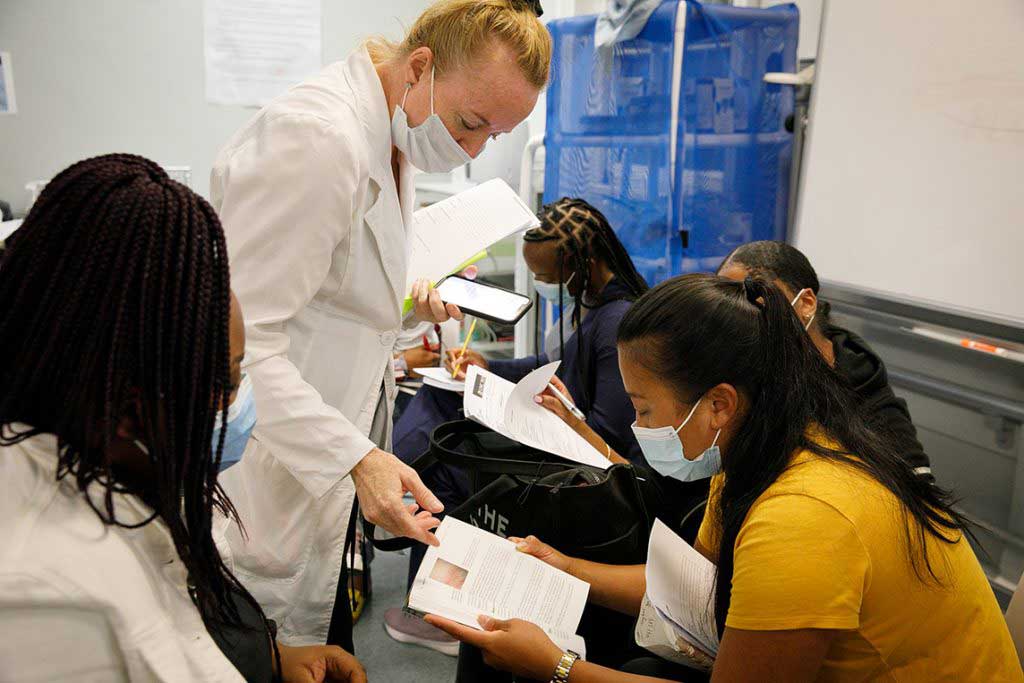
Begin by earning a BS in nursing, which combines nursing theory with hands-on learning. In nursing skills labs, develop clinical skills such as medication administration and patient assessment. In simulation labs, practice responding to clinical scenarios with high-tech medical manikins. During clinical rotations, learn to provide direct patient care.
Several pathways lead to a BS in nursing. Students without prior college education may pursue a traditional program, which typically takes four years. If you have a non-nursing bachelor’s degree, you may be eligible to apply to the Mount’s ABSN program, which enables you to graduate in as few as 16 months.
Take a closer look at earning your nursing degree with an ABSN program.
Pass the NCLEX-RN and Become a Registered Nurse
After graduation, apply for RN licensure with your state board of nursing and register for the NCLEX-RN. Once the board confirms your eligibility, you’ll receive an authorization to test (ATT) and can schedule the exam. After passing the NCLEX-RN and meeting your state’s other requirements, you can obtain your RN license.
The NCLEX-RN evaluates your nursing knowledge, critical thinking, clinical judgment, and ability to apply nursing theory to clinical situations. As a computerized adaptive test, it uses previous responses and the difficulty of those items to estimate your ability and determine the next question. This process tailors the exam to each candidate’s performance.
Gain Clinical Nursing Experience
After obtaining your RN license, you can begin applying for nursing positions. School nursing is generally not an entry-level specialty because school nurses often work independently, and many employers prefer candidates with clinical experience. Consider gaining one to two years of bedside experience in a specialty such as pediatric nursing.
Meet Your State’s School Nurse Requirements
School nurse requirements vary by state, so research the minimum qualifications where you plan to work. Some states require school nursing certification in addition to RN licensure. Even if the state does not, an individual school or district may prefer or require certification.
Depending on the employer, school RNs may need current cardiopulmonary resuscitation (CPR), basic life support (BLS), or advanced cardiac life support (ACLS) certification.
Consider School Nurse Certification or Credential Programs
If school nursing certification is required or supports your goals, review the eligibility requirements from the National Board for Certification of School Nurses (NBCSN). Eligible candidates must pass the exam to earn the Nationally Certified School Nurse (NCSN) credential.
Where School Nurses Work
School RNs work in public and private elementary, middle, and high schools, as well as on college campuses. Some school nurses work in other settings, including boarding schools, vocational schools, and schools on overseas U.S. military bases.

Get essential tips to prepare for nursing school.
Skills Every School Nurse Needs
Because school RNs often work independently, they need strong clinical skills in areas such as:
- Chronic condition management
- Crisis intervention
- First aid
- Infection prevention
- Medication management and safety
- Patient advocacy
- Pediatric health assessment and health screenings
Important professional skills for school nurses include:
- Communication skills
- Compassion and empathy
- Cultural sensitivity
- Interpersonal skills
- Patience
School Nurse Salary and Career Outlook
According to the U.S. Bureau of Labor Statistics (BLS), all types of RNs made a median annual salary of $93,600 as of May 2024. The projected job growth rate for RNs is 5% from 2024 to 2034, faster than average for all professions.
Because the BLS does not report employment data specifically for school nurses, the overall RN salary and job growth figures offer only a general context for the specialty.

Prepare for a School Nursing Career at The Mount
The University of Mount Saint Vincent can prepare you to pursue a school nursing career. The Mount supports the development of the whole student through nursing education designed to prepare graduates to take the NCLEX-RN with confidence.
With multiple locations in and around New York City and three start dates each year, the ABSN program offers a flexible path to earning a BS in nursing. After completing prerequisites, you could graduate in as few as 16 months.
Request information today to learn more about the ABSN program and take the next step.