
What is an informatics nurse? An informatics nurse is an RN who has moved away from the bedside to focus on integrating IT into clinical support. They can optimize digital systems to improve the delivery of care, as well as analyze data to determine how to reduce medical errors.

An informatics nurse works at the intersection of nursing science and information technology (IT). As healthcare increasingly relies on sophisticated technology, informatics registered nurses (RNs) play an important role in protecting sensitive patient information and using technology to improve health systems. Becoming an informatics nurse requires first meeting the requirements to become an RN, followed by specialized education and training.
No matter which nursing specialty interests you, you can build a foundation for your future at the University of Mount Saint Vincent. Our Accelerated Bachelor of Science in Nursing (ABSN) program, offered at multiple New York City locations, can help you earn a Bachelor of Science (BS) in nursing in as few as 16 months.
As you plan your career pathway, consider answers to common questions, including “What is an informatics nurse?” and “How does informatics improve patient care?” You can then explore the skills and career requirements for this specialty.
What Is an Informatics Nurse?
An informatics nurse is an RN who works at the intersection of clinical care and information technology. Nursing informatics integrates computer science and IT with nursing science to optimize clinical practice and manage, secure, and communicate nursing data.
An electronic health record (EHR) system is one example of nursing informatics in practice. Through a patient’s EHR, providers across a hospital or health system can access medical records, including medications, health history, lab results, and imaging scans. Nurse informaticists help implement, improve, and manage EHRs and other databases to protect data, while keeping it accessible.
What Does an Informatics Nurse Do?
An informatics RN’s role varies by healthcare facility. Responsibilities depend largely on the needs of the employer, patients, and providers.
Common tasks in this role include:
- Designing and optimizing digital systems to meet the needs of providers and support clinical decision-making
- Ensuring compliance with HIPAA and other applicable regulations
- Extracting and analyzing clinical data
- Serving as a clinical liaison between IT professionals, clinical providers, and hospital administrators
- Training and supporting providers and other staff members in the use of digital systems
Informatics nurses improve patient care and safety by tracking treatment patterns and patient outcomes to identify ways to reduce medical errors and improve care delivery.

Take a closer look at how quality improvement in nursing supports patient care and safety.
Where Informatics Nurses Work
Nurse informaticists typically work for hospitals or health systems, though some work in ambulatory care facilities or higher education. Opportunities may also be available in healthcare IT and software companies, consulting firms, and public health departments.
Essential Skills for Success in Informatics Nursing
Informatics nurses need a broad skill set that may include the following:
- Critical thinking
- Data analytics
- HIPAA compliance
- Patient advocacy
- Problem-solving skills
- Project management
- Technical proficiency in areas such as database querying
How to Become an Informatics Nurse
If nurse informatics appeals to you, take the following steps to pursue this role.
Earn a Nursing Degree
First, earn a nursing degree, such as a BS in nursing. While other degrees will qualify you for the licensure exam, a BS in nursing is comprehensive and prepares students to develop skills in critical thinking, leadership, and case management, which will benefit you in an informatics career.
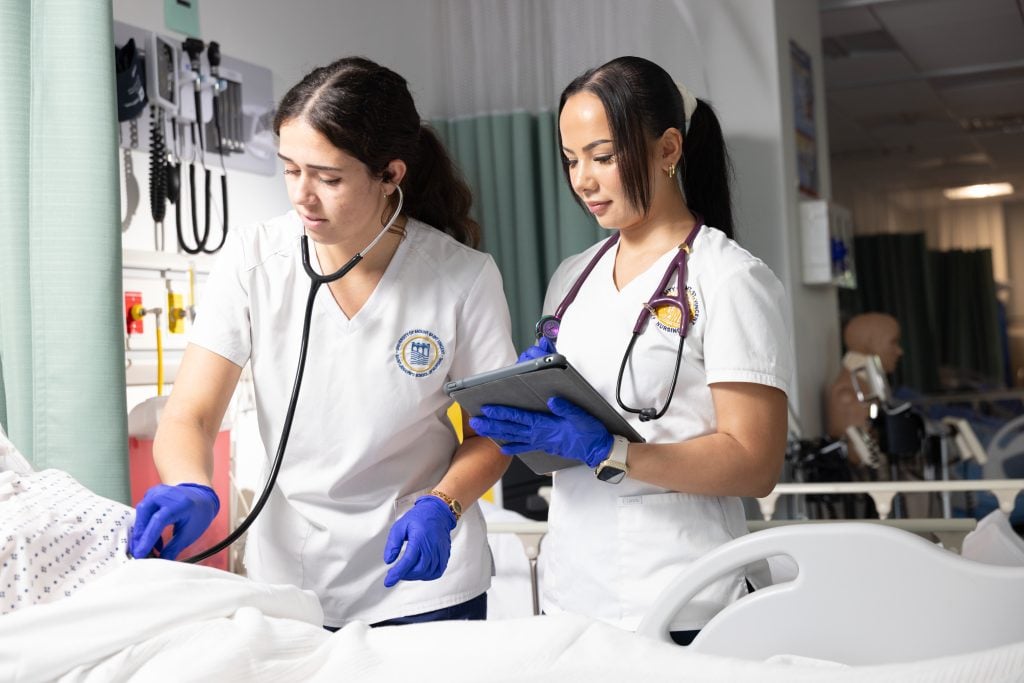
Nursing programs combine didactic coursework with hands-on learning experiences. While every curriculum is different, you can typically expect three main components:
- Nursing coursework, which covers fundamental nursing concepts
- Nursing skills and simulation labs, where students develop clinical skills and practice selecting appropriate interventions
- Clinical rotations, which provide experience caring for patients in healthcare facilities
Pass the NCLEX-RN Examination
After graduating from nursing school, apply to your state board of nursing (BON) for authorization to test. Once authorized, you can schedule a time to take the NCLEX-RN licensure exam. Passing the exam allows you to obtain your RN license through your state’s BON.
Gain Clinical Nursing Experience
Nurse informatics is generally not an entry-level nursing specialty. Before transitioning into this role, you’ll need clinical experience at the bedside. No specific entry-level specialty is required before moving into informatics, so choose one that aligns with your interests. Medical-surgical nursing can be a useful option because it will expose you to diverse patient populations and a wide range of health conditions.
Pursue Nursing Informatics Education or Certification
After gaining bedside experience as an RN, consider graduate-level nursing education. For example, you could earn a Master of Science in nursing with a concentration in informatics nursing. A nursing informatics degree can help you develop technical competencies and advanced clinical nursing skills.
According to a survey from the Healthcare Information and Management Systems Society (HIMSS), 47% of informatics nurses have a master’s degree or higher.
These results underscore the value of continuing education when transitioning into informatics. One credential to consider is the Informatics Nursing Certification (NI-BC) from the American Nurses Credentialing Center (ANCC). To earn this credential, you must meet work experience and education requirements and pass an exam.
Nursing Informatics Degree and Educational Pathways
Nurses can follow several educational pathways, each of which requires earning a nursing degree and obtaining licensure.
Some nurses earn an Associate Degree in Nursing (ADN), which typically takes two years. Although this is a faster pathway, an ADN does not provide the comprehensive education of a BS in nursing. ADN-prepared nurses who later pursue a master’s degree commonly earn a BS in nursing first.
A traditional BS in nursing takes four years to complete and is a good option if you do not already have a non-nursing college degree. If you hold a bachelor’s degree, you may qualify for an ABSN program, such as Mount Saint Vincent’s ABSN in New York City. You can graduate in as few as 16 months after completing required prerequisites.
Learn how to prepare for nursing school by following actionable tips.

Informatics Nurse Salary and Career Outlook
According to the U.S. Bureau of Labor Statistics (BLS), the median annual salary for RNs was $93,600 in May 2024. The BLS projects RN employment to grow by 5% from 2024 to 2034, faster than the national average for all occupations.
The BLS does not track employment data for informatics nursing specifically, but according to the HIMSS 2023 Nursing Informatics Workforce Survey, 60% of nurse informaticists surveyed reported earning a base annual salary of $100,000 or more. Actual informatics nurse salary varies depending on experience, education, certifications, employer, and geographic location.
How an ABSN Program Can Prepare You for a Career in Nursing Informatics
The Mount’s ABSN program builds a broad foundation of nursing competencies for pursuing a range of specialties. In nursing skills and simulation labs, you’ll learn to set up and operate complex medical equipment and use the technology found in healthcare settings.
Our ABSN program prepares you to take the NCLEX-RN exam and embark on a career in informatics nursing.
Take the First Step Toward a Career in Nursing Informatics
The University of Mount Saint Vincent helps eligible students with a non-nursing bachelor’s degree earn a BS in nursing in as few as 16 months. Our ABSN program, available in New York City, focuses on developing the whole student and preparing confident, practice-ready nurse candidates. Academic Success Coaches and small class sizes provide personalized guidance throughout the program.
Request info today and connect with an admission counselor at Mount Saint Vincent to learn more.