
Quality improvement in nursing is a structured and systematic framework for addressing problems with the delivery of care. The goals include improving patient outcomes and operational efficiency in the healthcare organization. Quality improvement requires gathering and analyzing data, developing and implementing changes, and evaluating the results.

Quality improvement in nursing is a systematic approach to improving patient care delivery. The goals include better patient outcomes and increased operational efficiency in healthcare organizations.
Nursing emphasizes continuous improvement through professional development, lifelong learning, and research that informs evidence‑based practice. The culture appeals to those who are intellectually curious and eager to refine their skills and knowledge.
Nursing and patient care, and the continual improvement of both, are central to the University of Mount Saint Vincent’s Accelerated Bachelor of Science in Nursing (ABSN) program in New York City. Our ABSN pathway allows those with a non‑nursing bachelor’s degree to earn a Bachelor of Science (BS) in nursing and transition into the profession quickly. We develop the whole student, fostering intellectual curiosity and lifelong learning.
If you’re considering nursing, explore the question, “What is quality improvement in nursing?” Learn why it matters, the nurse’s role in these initiatives, and examples of quality improvement in nursing that enhance patient care.
Understanding Quality Improvement in Nursing
In nursing, quality improvement is a structured approach to solving systemic problems and improving care delivery. Unlike generalized nursing research, it doesn’t test medications or address single-use implementations.
Instead, quality improvement in nursing centers on using data and evidence to enhance the healthcare system by improving care delivery. These initiatives often focus on a specific practice setting and allow nurses to test changes in clinical settings to evaluate improvements.
Why Quality Improvement Matters in Nursing and Patient Care
Nursing and quality improvement go hand in hand because nurses commit to ongoing professional development and continued learning. Benefits of nursing quality improvement initiatives include:
- Better patient safety
- Streamlined operational efficiency in healthcare organizations
- Stronger focus on healthcare equity
Additionally, quality improvement promotes timely, effective, and patient-centered care, supporting better outcomes.
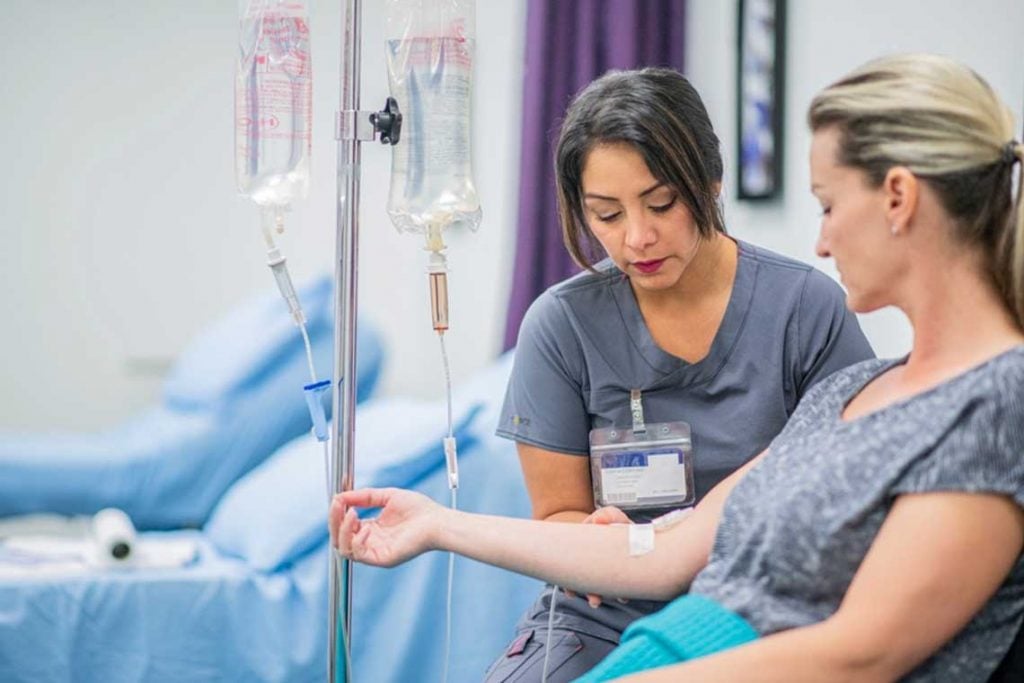
The Nurse’s Role in Quality Improvement
Nurses spend more time with hospital patients than other providers, giving them insight into care delivery, safety issues, and needed improvements. Healthcare organizations should engage nurses in quality improvement because they directly impact patient care.
By contributing ideas based on clinical experience, nurses can improve patient outcomes, care delivery, and organizational efficiency. Taking ownership of the quality improvement process also helps ensure successful implementation.
Common Quality Improvement Initiatives in Nursing
Some quality improvement initiatives enhance nursing practice across settings, while others address challenges unique to a particular organization. In all cases, the healthcare team and patients benefit from improvement‑focused changes.
Some quality improvement in nursing examples can include:
- Applying structured screening protocols to potential heart attack patients, regardless of age or gender, to eliminate implicit bias in diagnosis
- Establishing clear protocols for the usage and timely removal of urinary catheters, with the goal of reducing infections
- Implementing a system of “turn clocks” to ensure that bed-bound patients are moved often enough to prevent pressure ulcers
- Improving adherence to hand hygiene requirements and other safety and infection control measures
What is nursing theory? Learn why it matters and how to apply it.

Quality Improvement in Nursing: Examples of the Process
The nursing quality improvement process has four main steps:
- Identification: Identify an area needing improvement.
- Data analysis: Gather and analyze relevant data to understand the problem.
- Intervention: Develop and implement changes that target the problem.
- Evaluation: Evaluate the intervention’s effectiveness by collecting more data and comparing it with baseline results; adjust as needed.
How Data and Evidence-Based Practice Support Quality Improvement
Quality improvement in nursing depends on data analysis and the use of evidence‑based practice. By analyzing the data, nurses can identify problems with care delivery and areas for improvement.
Evidence‑based practices provide a framework of existing nursing knowledge that serves as the foundation for developing and implementing initiatives. Instead of creating new research, quality improvement draws on this framework to improve implementation.

Discover what awaits you when you earn your nursing degree in New York City.
Skills Nurses Need to Participate in Quality Improvement
Every nurse can participate in nursing quality improvement initiatives. Many skills that help you excel as a nurse can be applied to quality improvement, such as analytical skills, which support data interpretation.
Other helpful skills for quality improvement in nursing include:
- Adaptation
- Collaboration and teamwork
- Communication
- Critical thinking
- Leadership
- Problem-solving
Nurses also need a strong grasp of evidence‑based practice and the standards of care. It’s also helpful to be literate in computer applications used in the healthcare environment, as informatics skills are often used to analyze patient data and identify areas for improvement.
How an ABSN Program Prepares Nurses for Quality Improvement
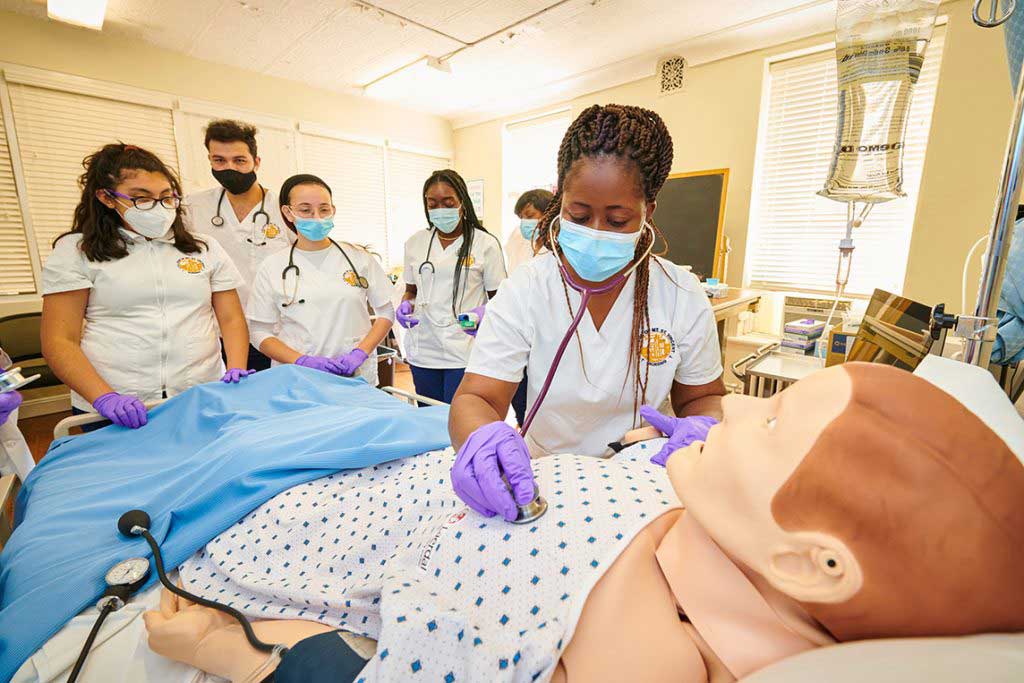
The Mount’s ABSN program teaches students to think critically and apply evidence‑based practices. Nursing theory classes cover standards of care and improving patient outcomes. Simulation labs help you apply analytical reasoning and the nursing process to complex care challenges. Clinical rotations provide hands‑on experience in the clinical environment.
These experiences prepare students to conduct themselves as professionals committed to evidence‑based nursing and quality improvement.
Get Started Today at The Mount
The University of Mount Saint Vincent prepares future nurse leaders to embrace continual improvement, elevating standards of care and improving patient outcomes. Our comprehensive curriculum develops the whole student to address complex healthcare challenges.
If you hold a non‑nursing bachelor’s degree, you may be eligible to apply to our ABSN program in New York City. Earn your degree in as few as 16 months after completing prerequisites and benefit from small class sizes, individualized support, and Academic Success Coaches.
Request more information today and connect with an admission counselor to get started.