
There are many nursing degree types. CNA and LPN certificates allow you to gain healthcare experience without committing to nursing school, while an ADN or a BS in nursing qualifies you to take the licensing exam to become an RN. The right degree for you depends on your career goals.

After deciding to switch careers to nursing, your next step is choosing a nursing degree program. For example, is an Associate Degree in Nursing (ADN) or a Bachelor of Science (BS) in nursing program right for you? Different nursing degree types can lead to distinct career paths. Explore the different types of nursing degrees before choosing the option that best fits your goals.
If you are a career changer who wants to earn a BS in nursing, the University of Mount Saint Vincent offers an accelerated path. The University’s Accelerated Bachelor of Science in Nursing (ABSN) program enables students with a non-nursing bachelor’s degree to earn a BS in nursing in as few as 16 months. The New York City-based program provides a comprehensive education that prepares students to take the NCLEX-RN confidently and begin their nursing careers.
What are the different nursing degrees available? What degrees do nurses need? Explore the requirements and career pathways associated with each option to determine which path best fits your goals.
Understanding the Different Types of Nursing Degrees
Nursing education is available at several levels. Some nurses, such as licensed practical nurses (LPNs), may hold a nursing certificate rather than a degree.
Beyond certificates, nursing degree options include, in order:
- Associate Degree in Nursing (ADN)
- Bachelor of Science in nursing (BS in nursing)
- Master of Science in Nursing (MSN)
- Doctor of Nursing Practice (DNP)

Why become a nurse? Discover the benefits of a nursing career.
Comparing Different Types of Nursing Degrees
The best nursing degree type depends on your career goals and level of education. For example, high school graduates may apply to a certificate, associate, or bachelor’s degree program. In contrast, most MSN and all DNP programs require applicants to first earn a BS in nursing.
Career goals also influence which degree path you choose. If you’d like to pursue career advancement later, a BS in nursing may offer more options than an ADN or certificate.
The table below compares the different types of nursing degrees with their associated career paths.
| Degree | Program Length | Career Pathway | Median Salary |
|---|---|---|---|
| CNA certificate | 4-12 weeks | Certified nursing assistant | $39,530 |
| LPN certificate | 1 year | Licensed practical nurse | $62,340 |
| Associate Degree in Nursing | 2 years | Registered nurse | $93,600 |
| Bachelor of Science in Nursing | 4 years | Registered nurse | $93,600 |
| Master of Science in Nursing | 1-2 years | Advanced practice registered nurse (APRN) | $132,050* |
| Doctor of Nursing Practice | 3-4 years | Advanced practice registered nurse (APRN) | $132,050* |
*Please note: The BLS combines median salaries for all types of APRNs. Compensation may be higher depending on specialty and degree.
What Can You Do With Different Nursing Degrees?
Your chosen degree strongly influences your career options. Review the career paths available for each level of nursing education.
Certified Nursing Assistant
A CNA is an entry-level healthcare position. CNAs work in hospitals and long-term care facilities and play an essential role in supporting nurses. CNAs assist patients with activities of daily living (ADLs) such as eating, dressing, and bathing. They are trained to support nurses with basic care tasks, such as taking and recording vital signs, but they do not provide medical care.
Licensed Practical Nurse
LPNs are entry-level nursing professionals, but they have a broader scope of practice than CNAs. They work in hospitals, hospice care, and long-term care facilities, assisting patients with ADLs. LPNs are trained to record vital signs, treat wounds, administer medications, and check IVs; however, depending on state regulations, LPNs usually cannot start IV medications or administer medication through the IV.
Registered Nurse
RNs work in a wide variety of healthcare facilities and organizations, at the bedside and beyond. RNs have a broader scope of practice and more autonomy than CNAs and LPNs. Their responsibilities include:
- Medication administration
- Patient assessments and medical record-keeping
- Patient education
- Wound care
Becoming an RN allows you to play a direct role in patient recovery. The role also offers opportunities for advancement across specialties ranging from pediatrics to geriatrics.
Advanced Practice Registered Nurse
Among nursing professionals, APRNs have the most advanced education and training. Accordingly, they have the greatest autonomy and the broadest scope of practice. Some APRNs serve as primary care providers or nurse leaders.
There are several types of APRNs, including:
- Nurse practitioner (NP): NPs are primary care providers who specialize in family primary care, adult gerontology, psychiatric health, women’s health, neonatal care, or pediatrics.
- Certified nurse midwife: CNMs care for patients during pregnancy, delivery, and postpartum recovery.
- Certified registered nurse anesthetist (CRNA): CRNAs administer anesthesia to patients undergoing surgical procedures.
- Clinical nurse specialist (CNS): A CNS may serve in leadership and educational roles and specialize in family practice, neonatal care, pediatrics, psychiatric health, and more.

Why a BS in Nursing Is Becoming the Preferred Nursing Degree
Two common degree pathways can prepare you to become an RN: an ADN or a BS in nursing. While both qualify graduates to take the NCLEX-RN exam, a BS in nursing may offer additional benefits.
Growing Employer Demand for Baccalaureate-Educated Nurses
Employers often prefer nurses with a BS in nursing over those with an ADN. According to the American Association of Colleges of Nursing (AACN), 96% of BS in nursing graduates found entry-level positions within four to six months after graduation.
Many organizations prefer to hire BS in nursing-educated nurses because research associates a higher proportion of baccalaureate-prepared nurses with better patient outcomes. A BS in nursing prepares graduates to apply evidence-based nursing interventions.
Career Flexibility and Advancement Opportunities
A BS in nursing can provide greater career flexibility. For example, baccalaureate-prepared nurses can pursue a range of nursing specialties. After gaining clinical experience, they may also pursue advancement opportunities.
Some nurses may advance to roles such as charge nurse without earning a graduate degree, and instead earn professional certifications to support these goals. Others leverage their BS in nursing to earn graduate degrees for nurses. A graduate degree allows them to pursue roles as APRNs, nurse managers, or nurse administrators.
Patient Care and Healthcare Outcomes
The different degrees in nursing may be associated with different patient outcomes. For example, one study found that hospitals with more baccalaureate-prepared nurses had lower rates of 30-day inpatient surgical mortality. The findings associate a greater proportion of nurses with BS degrees with improved surgical survival.
Another study determined that hospitals that committed to increasing their proportion of baccalaureate-prepared nurses experienced a 7.8% decline in length of stay. The average stay decreased from 5.1 to 4.7 days as the proportion of baccalaureate-prepared nurses increased.
Discover what you can expect when earning your BS in Nursing in the heart of New York City.

Earn a BS in Nursing Through an Accelerated Nursing Program
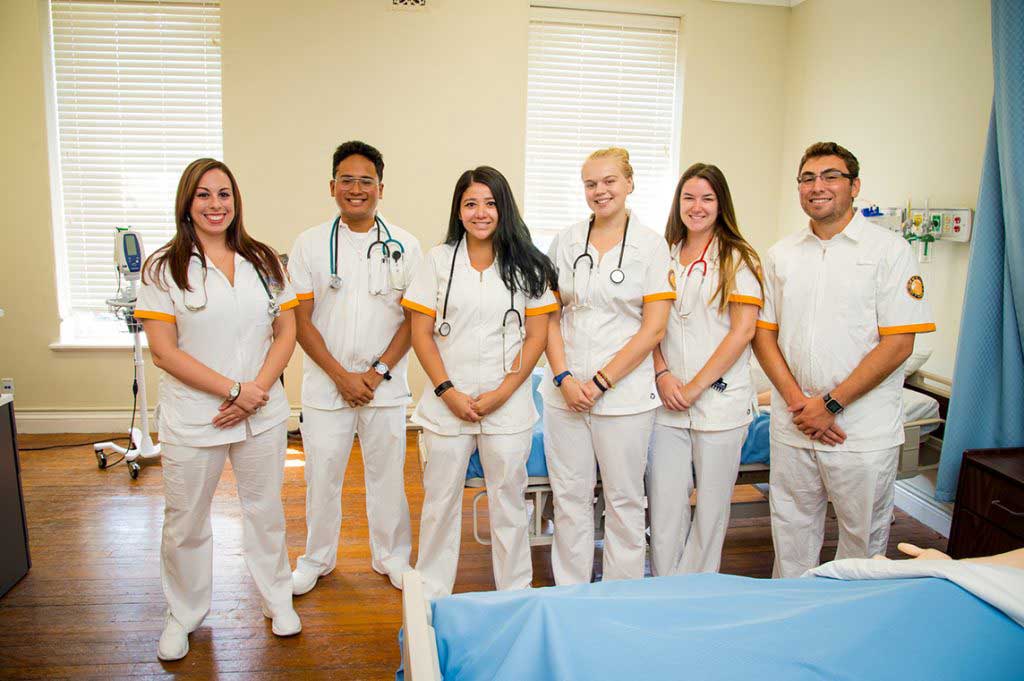
At the University of Mount Saint Vincent, the ABSN program combines nursing coursework with hands-on experiential learning to provide a well-rounded nursing education. The curriculum integrates coursework, skills and simulation labs, and clinical rotations.
In skills and simulation labs, students practice essential nursing skills such as nasogastric intubation and wound care. By working with high-fidelity medical manikins, students gain practical experience providing patient care in a simulated environment.
In simulation labs, students respond to simulated medical emergencies. These experiences prepare students for clinical rotations, where they provide direct patient care in healthcare facilities throughout New York City. They work under the supervision of trained preceptors and alongside nursing professionals.
Start Your Nursing Career With Mount Saint Vincent’s ABSN Program
When you’re ready to earn a BS in nursing, Mount Saint Vincent’s ABSN program offers an accelerated path. If you have a non-nursing bachelor’s degree, you may be eligible to earn your BS in nursing in as few as 16 months at the Mount.
As an ABSN student, you’ll benefit from a close-knit nursing cohort, small class sizes, and support from Academic Success Coaches. Request info today and connect with an admission counselor.