
Artificial intelligence is being integrated into the nursing profession with the goal of improving patient care and reducing heavy workloads for nurses. AI in nursing includes AI-assisted remote monitoring, semi-automated documentation, and smart scheduling. Nurses can benefit from seeking digital upskilling opportunities and prioritizing the ethical use of AI.
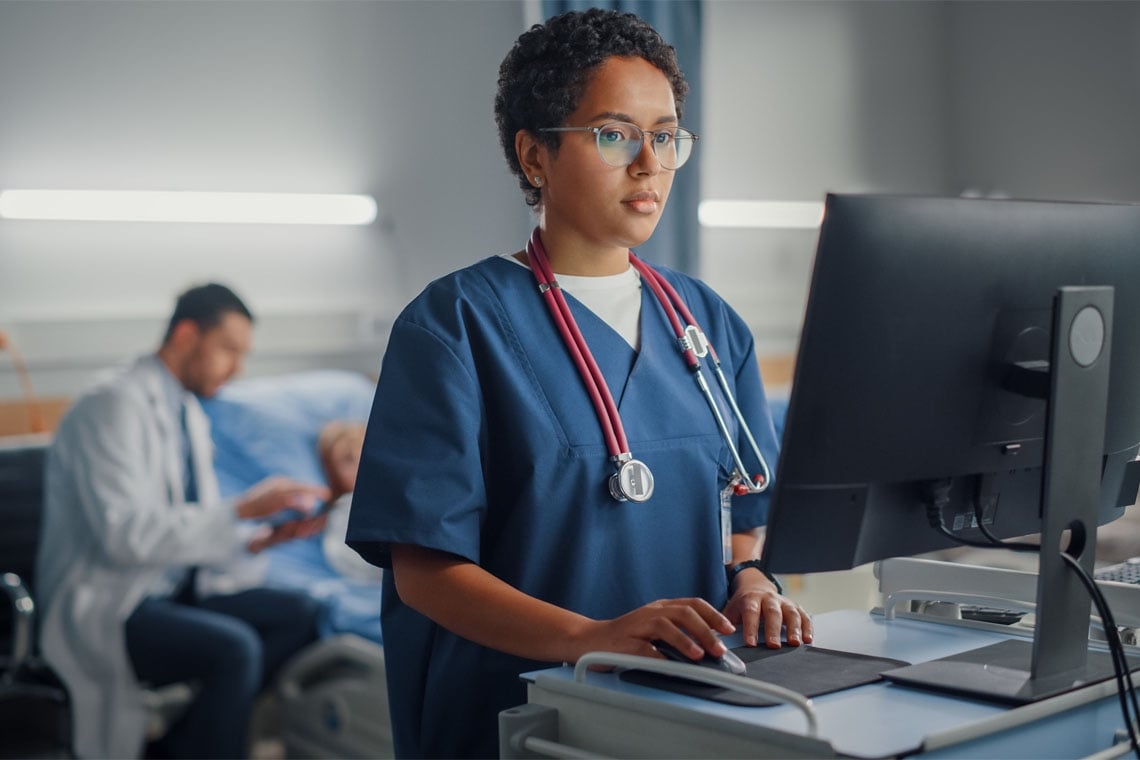
Artificial intelligence is being used in everything from media to manufacturing, so it’s no surprise that it’s also impacting healthcare. Combining artificial intelligence with nursing professionals may improve the efficiency of care delivery while ensuring patients’ needs are met. If you’re thinking of becoming a nurse or starting nursing school, it’s worth examining how AI in nursing may affect your career.
You’ll start becoming familiar with nursing technology as a nursing student. The University of Mount Saint Vincent’s Accelerated Bachelor of Science in Nursing (ABSN) program introduces students to the same technology used in hospitals today so that they can work confidently in the real world.
How is AI used in nursing currently, and how will AI affect nursing in the future? Take a closer look at some examples of artificial intelligence in nursing, its potential benefits, and some potential drawbacks to consider. Then, reflect on how AI may affect nursing in the future.
What Is Artificial Intelligence in Nursing?
Artificial intelligence in nursing is the integration of computer algorithms, machine learning, and, in some cases, AI-enhanced robotics into the nursing workplace. AI agents can streamline or automate certain nursing tasks while augmenting nurses’ knowledge and decision-making.
Artificial intelligence can never completely replace nurses. Nursing is fundamentally a human-driven profession that requires rapport, trust, and relationship-building between provider and patient. Rather than replacing nurses, AI is being used to augment their work, enabling them to spend more time providing a human touch.
How does an accelerated nursing program work, and is it right for you?
How Is AI Used in Nursing? Real-World Examples and Applications
AI is being integrated into the nursing landscape in several ways. Some examples of artificial intelligence in nursing include:
- Documentation: Integrating AI into EHRs automates routine patient documentation. Nurses still need to verify that the information is correct, but this typically takes less time than entering the data themselves.
- Remote monitoring: AI can be integrated into remote health monitoring devices, such as continuous glucose monitors (CGMs). This helps nurses quickly identify when a patient is at risk of an adverse health event.
- Scheduling: It isn’t always easy to predict when a department will need more nurses to handle high patient volumes. AI agents can predict staffing needs, helping ensure that departments have enough nurses on hand to meet patient demand.
Benefits of AI in Nursing for Nurses and Patients
While healthcare organizations may decide to embrace the combination of nursing and AI to reduce costs and improve operational efficiency, artificial intelligence in the nursing field offers the greatest benefits for nurses and patients.
Benefits for Nurses
In many nursing specialties, such as medical-surgical nursing, RNs often juggle many patients at once and handle a heavy workload, including repetitive tasks. Overworked nurses are more likely to suffer from chronic stress and professional burnout.
Artificial intelligence can’t solve all these problems, but it can streamline and even automate certain tasks, reducing nurses’ workload. This not only improves the efficiency of care delivery but may also enhance RNs’ mental health, reducing their risk of burnout and compassion fatigue.
By augmenting clinical decision-making, AI in nursing may even lessen the cognitive burden of clinical care. Furthermore, it may reduce the risk of making nursing errors, ranging from improper documentation to medication mix-ups. Meanwhile, nurses have more time and energy for patient interactions.
Benefits for Patients
When nurses have more time for their patients, patients may enjoy a better care experience. In this manner, artificial intelligence in nursing may improve patient satisfaction rates. Patients could also benefit from reduced risk of nursing errors and AI-optimized care plans.
In some cases, artificial intelligence may help support better patient outcomes. For example, AI may assist providers in making earlier diagnoses, facilitating earlier treatment and, consequently, improved patient outcomes. In addition, AI-integrated remote health monitoring technologies can increase access to care for patients, particularly those with limited access to healthcare or with transportation or mobility difficulties.
How Will AI Affect Nursing in the Future?
Only time will tell how artificial intelligence continues to evolve and affect the nursing profession moving forward. It’s possible that more healthcare organizations will adopt AI technologies and provide their nursing workforce with AI literacy training.
One emerging trend is the use of AI agents to support the orientation and onboarding of new nurses. This can provide greater flexibility for organizational resources. It’s expected that digital upskilling will become an increasingly important component of onboarding for nursing jobs.
According to the 2025 Future Ready Healthcare Survey, about 57% of nurses expressed concern about the privacy and safety of patient health data when AI is integrated. It’s possible that another emerging trend will involve more robust governance and clear guidelines on access, data use, and compliance standards, as AI integration advances. Another possibility is that AI algorithms may be used to create more robust digital protections for patient health data.
Explore the nursing specialty of telehealth nursing and learn more about how technology is changing the profession.

Challenges and Considerations of AI in Nursing
As promising as the integration of artificial intelligence in healthcare can be, it also poses significant challenges and potential disadvantages. One of the most significant concerns involves professional ethics. AI may be used unethically, with a range of potential issues such as:
- Clinical judgment: Although AI may assist with diagnosis or suggest treatment, it can never replace the clinical judgment of an experienced healthcare professional. Yet, there is a possibility that over-reliance on AI may undermine a provider’s critical thinking skills and clinical decision-making.
- Environmental health: A patient’s environment affects their health. The public health effects of the rush to build AI data centers may be concerning to nurses.
- Patient privacy: Healthcare organizations have long been targets for cyberattacks and data breaches. AI systems are now top targets, as well, considering that those integrated into healthcare organizations may have access to sensitive patient data.
- Social bias: AI is trained on vast amounts of human-generated data, including content that may contain biases. These biases may then become evident in AI-assisted diagnostics and treatment to the detriment of patients.
How Nurses Can Prepare for the Future of Nursing and AI
How will AI affect nursing in the future? Time will tell, but nurses and nursing students can prepare for that future right now. Look for training opportunities in areas such as health informatics, predictive analytics, and general digital or AI literacy. Sign up for professional development courses, workshops, and seminars on these topics.
When using AI in your daily work, keep ethical use of AI top of mind. Continue to apply your critical thinking skills, evaluating AI-generated diagnoses or treatment recommendations through the lens of your nursing education and clinical experience. Always ensure that you use AI in a way that protects patient privacy, and watch out for the possibility of inherent biases in AI agents.
Earn Your BS in Nursing at a High-Tech Nursing School
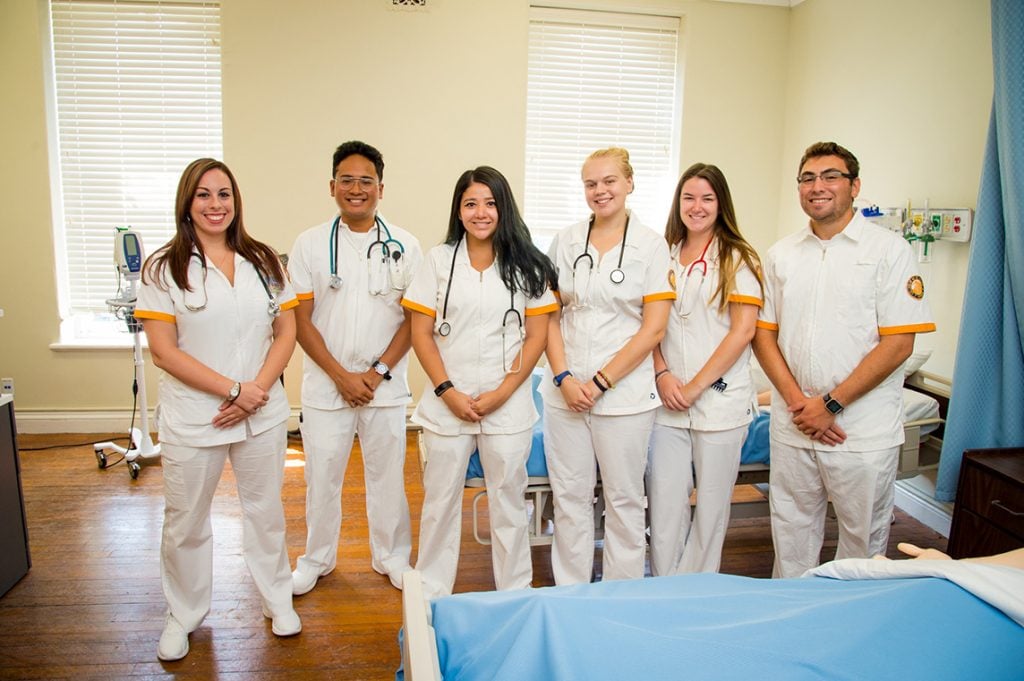
The University of Mount Saint Vincent offers a cutting-edge experience at our innovative nursing school. Our nursing labs are fully equipped with sophisticated medical equipment and advanced medical manikins, so you can practice patient care in a risk-free setting while mastering the same equipment you’ll use at healthcare facilities. Along the way, you’ll benefit from the guidance and support of attentive faculty members and Academic Success Coaches.
If you have a non-nursing bachelor’s degree, you may be eligible to apply to our ABSN program in New York City. Request more information and connect with an admission counselor today to learn how you can get started.